Will it be painful?
Pain control, anaesthesia and the first recovery days are explained before admission.


A surgery page should reduce fear, not increase it. Explore endometriosis, fibroid, uterus removal, hysteroscopy and other gynecology procedures with simple guidance on why, when and what happens next.
Surgery only when needed
Your scans, symptoms and goals are reviewed before any procedure is advised.
Small-cut approach
Laparoscopy and hysteroscopy are considered first when clinically suitable.
Future health protected
Pain relief, fertility plans and long-term comfort are discussed together.
Pain control, anaesthesia and the first recovery days are explained before admission.
For endometriosis, fibroids and cysts, healthy reproductive tissue is protected wherever possible.
Most laparoscopic procedures use tiny keyhole cuts, and hysteroscopy avoids abdominal cuts.
Hospital stay, walking, work, periods and follow-up are planned according to the procedure.
Each service opens a detailed guide. Endometriosis goes to the endometriosis blog page, and other procedures open their own surgery information pages.
Before any surgery decision
Keyhole precision
Smaller cuts, better comfort
Faster recovery
Structured healing support
Fertility aware
Preserve healthy tissue
Endometriosis Surgery
Advanced laparoscopic surgery to remove endometriosis tissue, reduce chronic pelvic pain, preserve fertility, and improve quality of life.
Often discussed for
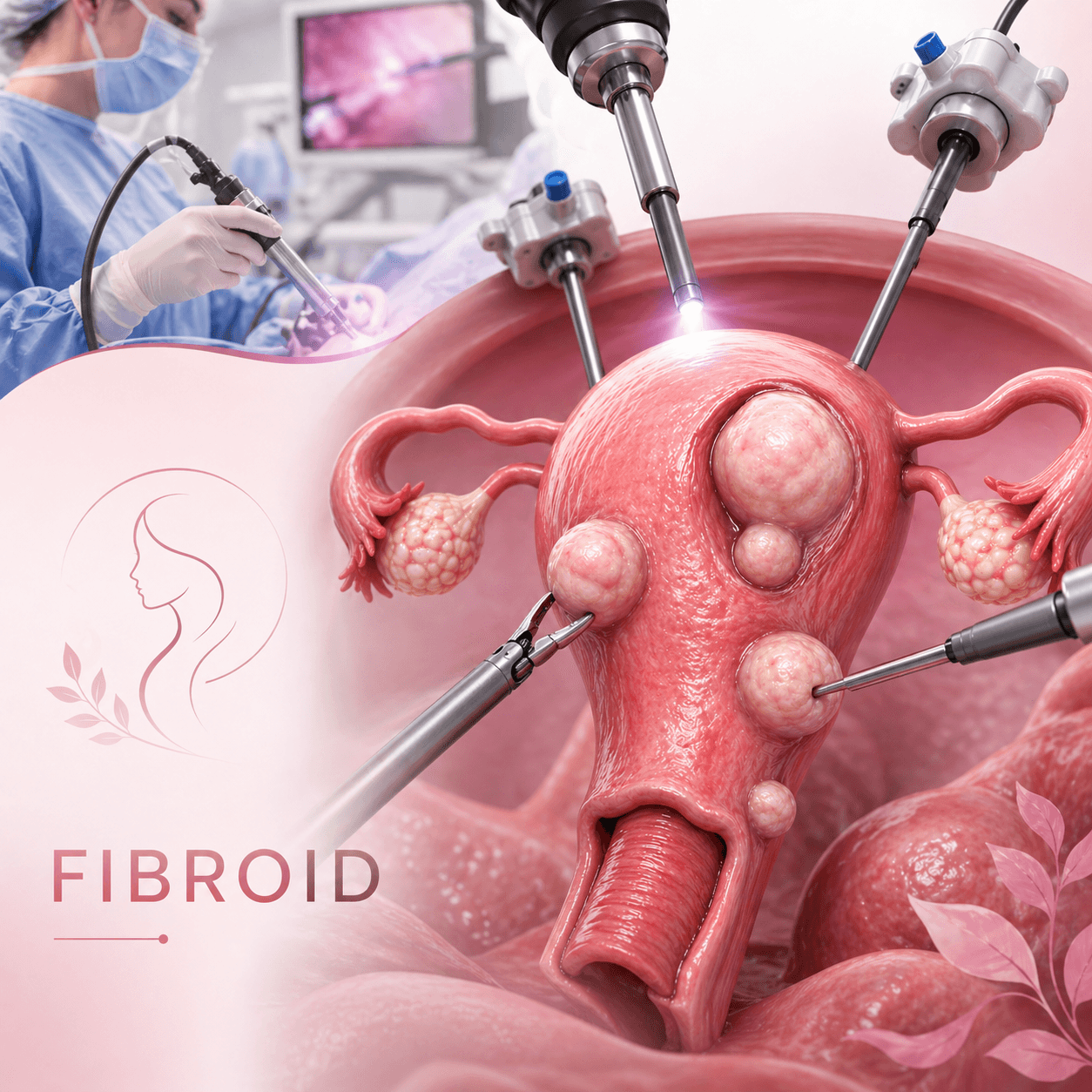
Fibroid Removal
Minimally invasive removal of uterine fibroids while preserving the uterus, ideal for women planning future pregnancies.
Often discussed for
Ovarian Cyst Removal
Laparoscopic ovarian cyst removal with fertility-preserving techniques to relieve pain, prevent complications, and protect ovarian function.
Often discussed for
Uterus Removal
Minimally invasive hysterectomy performed for large fibroids, abnormal bleeding, adenomyosis, or other uterine conditions when necessary.
Often discussed for
Fertility Enhancing Surgery
Specialized laparoscopic and hysteroscopic procedures designed to improve fertility by treating endometriosis, fibroids, adhesions, and tubal problems.
Often discussed for
Hysteroscopy
Advanced day-care procedure used to diagnose and treat uterine polyps, fibroids, adhesions, abnormal bleeding, infertility, and recurrent miscarriages.
Often discussed for
Cancer Surgery
Comprehensive surgical treatment for gynecological cancers including uterine, ovarian, and cervical cancers using advanced minimally invasive techniques whenever possible.
Often discussed for
Cervical Cerclage
Laparoscopic cervical cerclage provides strong cervical support to help prevent recurrent miscarriages, preterm birth, and pregnancy loss due to cervical weakness.
Often discussed for
A clear pathway helps reduce anxiety. The aim is to explain the diagnosis, the reason for surgery, the safer route and the recovery plan before the procedure.
Pain pattern, bleeding, fertility goals, reports and previous treatment are discussed first.
Ultrasound, hysteroscopy, laparoscopy planning or additional tests are considered only as needed.
Medical care, monitoring, hysteroscopy or laparoscopy is selected around your condition.
Follow-up covers wound care, pain, diet, movement, periods and when to resume routine.
These signs do not always mean surgery, but they should be evaluated early so pain, bleeding, fertility and recovery are not delayed.